
StableCoins – A Solution to the Prevalent Volatility of Cryptocurrencies

StableCoins – A Solution to the Prevalent Volatility of Cryptocurrencies

StableCoins – A Solution to the Prevalent Volatility of Cryptocurrencies

As decentralized virtual currencies on the Blockchain, cryptocurrencies wield immense potential in the field of finance. This is because cryptocurrencies do offer not only an alternative medium of payment and store of value but also an effective solution to some of the pertinent challenges associated with fiat currencies.

Some of these challenges include;
a) High transaction costs
b) Long transaction completion timelines
c) Inefficient cross-border payment processes
d) Direct control by central monetary authorities and involvement of third-party institutions
e) Susceptibility to inflationary pressures
f) Limited privacy of financial transaction data

Cryptocurrencies can solve these problems of conventional currencies mainly because they are decentralized. This is because they facilitate peer-to-peer transactions that do not require intermediaries’ involvement.

This reduces the costs and time required to complete transactions, increases transactional data privacy, and provides a hedge against inflation. However, one critical challenge associated with regular cryptocurrencies makes them less than ideal.

Volatility

According to the Binance Academy, volatility “describes how quickly and how much the price of an asset changes.” As such, volatility is simply a measure of the fluctuations that characterize the market prices of assets, including cryptocurrencies.

With that said, volatility is one of the biggest problems that users of cryptocurrencies have to contend with in the current crypto ecosystem. This is because volatility increases the risks of owning and investing in crypto and undermines its utility. But why is crypto so volatile?

Like with all other goods and services, the fluctuations in the value of cryptocurrencies come down to how the supply and demand of the asset behave. The value of cryptocurrencies is not pegged to real-life assets because they are purely virtual currencies.

Therefore, whenever events unsettle investors occur, the market value of cryptocurrencies shifts. For instance, if the government refuses to acknowledge a cryptocurrency as a medium of exchange, the price of that cryptocurrency is likely to drop.

On the other hand, if a government accepts crypto as a valid form of payment, the price appreciates. This makes cryptocurrency markets very speculative. And while this speculation allows investors to earn very high returns from crypto, it also introduces a lot of volatility to the crypto market.

This volatility makes cryptocurrencies very unreliable when it comes to being used as a medium of payment. However, developments in the crypto space have created a solution that mitigates this challenge.

StablecCoins – The Antidote to Volatility

According to Coinbase, a stablecoin is a “digital currency pegged to a ‘stable’ reserve asset like the US dollar or gold.” As such, stablecoins are much like other cryptocurrencies with the only difference being that they are backed by a real world asset.
The result of this convergence of digital currencies and regular currencies is an enhanced currency which has the benefits of both types of currencies. On the one hand, stablecoins offer users the stability that conventional cryptocurrencies lack while allowing them to enjoy the superior capabilities of crypto over fiat currencies.

How Do StableCoins Work?

There are three main types of stablecoins, namely;
 Fiat-collateralized stablecoins
 Crypto-collateralized stablecoins
 Algorithmic stablecoins

Fiat-collateralized stablecoins work by keeping a reserve of fiat currency that matches the value of the coins in the custody of an independent custodian. These stablecoins are also independently audited to ensure that they are indeed at par with the fiat currency to which they are denominated.

Crypto-collateralized stablecoins are much like fiat-collateralized stablecoins. However, the difference is that crypto is volatile, unlike fiat currency. As such, the number of crypto assets used to back up such stablecoins usually exceeds the value of those stablecoins to insure against drastic drops in value.

Lastly, algorithmic stablecoins do not necessarily rely on being dominated by a fiat currency or backed by a crypto asset. Instead, their stability is achieved through regulating their supply algorithmically using computers.

The Benefits of StableCoins

Below is a comprehensive breakdown of the benefits that come with the use of stablecoins over regular cryptocurrencies and fiat currencies;

a) Enhanced stability

While the value of fiat currencies fluctuate in relation to each other, they are mostly stable due to the fact that they are backed with assets like gold reserves. In the same way, stablecoins are backed by traditional reserve assets in fiat form.
For that reason, the value of stablecoins does not fluctuate frequently and uncontrollably the way unregulated crypto assets. This offers crypto investors a prime opportunity to fully exploit the potential of cryptocurrencies.
Long-term plans like storing value in crypto form can be made without the fear of losing money. Additionally, this enhanced stability has the potential to fast-track extensive adoption of crypto due to the fact that their value is predictable and regulated. Hence, they can be used in every day transactions.

b) A reliable alternative to fiat currencies

Once issues of scalability and environmental sustainability are sorted out, various crypto protagonists argue that cryptocurrencies will be able to effectively replace fiat currencies. However, stablecoins have the potential to provide an alternative even in the current dispensation.
This is because stablecoins are pegged to the value of real fiat currencies. As such, a stablecoin like USDC which is pegged to the dollar can be used to complete payments in the US. Additionally, stablecoins can also be used to pay for goods and services in areas where the local currencies are not stable.

c) Cheaper transaction costs

While the value of stablecoins is tied to fiat currencies, stablecoins do not adopt other qualities of fiat currency. For instance, stablecoins are decentralized assets that do not require the intervention of third parties like Central or commercial banks like fiat currencies.
As such, users of stablecoins do not have to incur any extra costs as transaction or service fees for payments facilitated by a third party. All they have to pay are the gas fees to validate the Blockchain transaction and that’s all.

d) Faster cross border payments

The world’s economies are more integrated today than ever before. As such, there exists an intricate web of bilateral and multilateral trade interdependencies between countries that necessitate systems for making payments internationally.

In such cases, stablecoins come in handy as they retain the decentralized, peer-to-peer system of conventional cryptocurrencies. They facilitate fast transfer of payments across borders by obliterating the need for payment companies which would only make the process longer and costlier.

Improvements to be Made in the StableCoins Ecosystem

And while a lot of opportunity lies in the adoption of stablecoins, several concerns make the experience of end users fairly challenging. For instance, there is a lot of uncertainty around the regulatory status of stablecoins.
This is because cryptocurrencies largely remain unregulated due to the fact that they are entirely decentralized and based on the Blockchain. However, stablecoins are pegged to fiat currencies and fiat currencies are regulated by governments.

This fact raises concerns if stablecoins are also supposed to be governed by statutory regulations. Additionally, end users are also concerned by just how extensively acceptable can stablecoins be in terms of facilitating payments for goods and services.

This is because there would be no need for more people to switch from cryptocurrencies to stablecoins only to encounter some scalability issues associated with regular crypto. Therefore, efforts must be made to fast-track the wide-scale adoption of stablecoins as a payment medium.

Lastly, security is a pertinent issue when it comes to all Blockchain applications. Due to the complexity of the Blockchain and its associated technologies, end users are not very conversant with the security architecture of crypto assets, including stablecoins.

As a result, they may not be able to audit the effectiveness of that architecture in protecting their assets. Therefore, it is important for the security measures protecting stablecoins to be optimized to prevent theft by unscrupulous hackers.

The Relevance of StableCoins in the Corporate Context

While there may be some challenges along the way, there is no denying that humanity is fast on track to adopting decentralized payment methods. This is in a bid to reduce costs, save time, and increase overall efficiency.

Therefore, it is important for all forward-looking businesses seeking to gain a competitive edge over their rivals to be at the forefront of integrating cryptocurrencies and in this particular case, stablecoins, into their financial systems.

This is because stablecoins have the capability to expedite payment processes and allow for better business outcomes through the use of the crypto ecosystem. However, there is one prerequisite for such advancement to be made.

Providing Corporate Entities and SMEs with the Information They Need To Excel

There needs to be an elaborate training and educational infrastructure for professionals in corporate organizations on how to use stablecoins and Blockchain technologies in general. This is precisely what our platform EduLab is here to do.

As an IT consulting company, we understand the importance of businesses incorporating the best technologies into their business processes for maximum gains. As such, we focus on providing business entities with accurate, cutting-edge information to enable them to exploit technology’s full potential.

This includes information on the latest technological innovations like the Blockchain, cryptocurrencies, and NFTs. We use innovative educational methods like Hackathons which provide an intensive but cost-efficient way of learning about various topics to equip teams with the knowledge they need to grow their businesses.

Web3_Hackathon_Sig_072022

Transforming Your Business through Quality Consulting

To ensure quality learning and implementation outcomes, our hackathons are not generalized solutions offered uniformly to every corporate entity or SME that contracts our services. Instead, we conduct a keen analysis of your business needs and potential areas that can benefit from Blockchain and other technological solutions.

Our experts then come up with customized Hackathon programs specially tailor-made for your business. This helps to ensure that you and your team are able to effectively solve inefficiencies in your business’s structure for better work outcomes.

Therefore, are you a small, medium, or large-sized business organization seeking to leverage technology to optimize your processes, improve product strategy, and steer personnel development? Then EduLab is just what you need. Hire our service today and we will help you get ahead of the competition through the best coaching, mentorship, and feedback systems!

IGNITE THE FUTURE – A keener lock into Cryptocurreny Tokens and their Applications

IGNITE THE FUTURE – A keener lock into Cryptocurreny Tokens and their Applications

IGNITE THE FUTURE

A keener lock into Cryptocurrency Tokens and their Applications

In the last decade, cryptocurrencies have generated widespread interest among investors and the general public as a potentially revolutionary innovation. Not only have perennial investors taken the chance and invested millions of dollars in crypto.
Rather, even conventionally conservative and risk-averse members of the public have also taken a keen interest in cryptocurrencies. For instance, of the 145 million people in the US who have invested in crypto, 107 million of them have done so within the past 24 months. Among the rest of the American population, 46 million more people intend to invest in cryptocurrencies within the next 12 months. So why is the cryptocurrency phenomenon so alluring to both seasoned and novice investors?

To effectively answer this question, one must not only understand how cryptocurrencies work but more importantly, one must know which are the practical, real-life applications of cryptocurrencies.

By now, you’ve probably heard about the Blockchain— one of the most popular technology buzzwords currently besides cryptocurrency and NFTs. If you have, you know that the Blockchain is a secure, decentralized public ledger that keeps an immutable record of data transactions. This distributed ledger is native to the cloud and cannot, therefore, be accessed physically. It is this quality that makes the Blockchain fundamental to the existence, function, and utility of cryptocurrencies.

This is because cryptocurrencies are essentially digital currencies that exist on the Blockchain. The main difference between fiat currencies and cryptocurrencies is that cryptocurrencies are virtual and hence cannot be accessed in any physical form. Because they are primarily based on the Blockchain, cryptocurrencies are also decentralized. Hence, cryptocurrencies are not regulated by any central authority. Rather, cryptocurrencies rely on a trustless system to ensure crypto transactions are completed according to predetermined conditions.

High level security

As earlier mentioned, cryptocurrencies are based on Blockchains. As such, crypto is decentralized and there is no central regulatory authority to enforce trust between users or prevent fraud or theft. However, cryptocurrencies are secured by a sophisticated security system of cryptographic technology. Cryptographic security employs symmetric, asymmetric, and hashing techniques to ensure that transaction data and history on the Blockchain cannot be hacked, altered, or erased.
Cryptography involves the encryption of data from a sender using an algorithm. Data in plain text is converted into ciphertext and then transmitted through an often insecure network to the recipient. Encryption of that data makes it very difficult for unintended recipients to decipher it upon interception. Only until the data reaches the intended recipient is it converted back from ciphertext into plaintext by a private key.

This conversion from ciphertext to plaintext is what is referred to as decryption. Therefore, cryptocurrencies are a secure form of currency on the Blockchain that are extremely difficult for malicious parties to tamper with.

Crypto Tokens

Every crypto enthusiast, investor, or follower has probably come across the word “crypto tokens.” This is because crypto tokens are a vital part of the cryptocurrency universe and serve a crucial purpose. So what exactly are they?
A crypto token is a type of cryptocurrency that exists on a specific Blockchain. Crypto tokens are created by developers who want to create a new cryptocurrency without having to build a new Blockchain from the ground up.

As such, a token is essentially a cryptocurrency that exists on a Blockchain and has its own separate native currency. You can think of the Blockchain as your own personal blog where you publish articles. Even though you are the owner of the platform and the author of the articles posted on it, you can always publish other articles written by guest authors. In this analogy, those articles written by guest writers are what we are referring to as tokens in relation to a Blockchain (in this case your blog.) Therefore, crypto tokens are essential “guest” cryptocurrencies on a particular Blockchain. This is why it is important to never use the terms “coin” and “token” interchangeably as far as cryptocurrency is concerned. Similar to tokens, coins are a type of cryptocurrency. However, a crypto coin is a kind of cryptocurrency that is the native currency of a Blockchain and not a “guest.” For instance, Ethereum is one of the most recognized Blockchains. There are several cryptocurrencies that are based on the Ethereum Blockchain. However, the Blockchain’s native currency is Ether (ETH). This makes Ether a crypto coin while the rest of the cryptocurrencies which include LINK (Chainlink), UNI (Uniswap), and SHIB (Shiba Inu) are Ethereum tokens.

This begs the question: Why do some programmers choose to develop crypto tokens instead of building Blockchains from scratch and then creating native coins for those Blockchains? Some reasons can be attributed to this decision;

  • Developing a secure and robust Blockchain is a very hectic process both in terms of technical requirements as well as time and financial resources. Therefore, creating a crypto token is simpler and faster as it eliminates the need to build a new Blockchain.
  • Secondly, Blockchain security is to a large extent hinged on the fact that it is a decentralized ledger that is distributed to several computers in a network. For financial transactions to be verified and validated, there has to be a consensus among all the computers in the chain.
    As such, the more users in a Blockchain, the more secure the Blockchain becomes. Naturally, a new Blockchain would take a significant amount of time before accumulating many participants.
    So it can be in a developer’s best interest to create a crypto token that can leverage a large number of participants and the resultant high-security level of an existing Blockchain network as opposed to creating an entirely new one.

Now that you have a clear idea of what crypto tokens are and how they differ from crypto coins, it is important to know the different types of tokens in existence and how they are used. The following is a comprehensive breakdown of token types and their use cases;

  • Currency tokens
    Currency tokens are much like regular fiat currencies. This is because they are primarily used to facilitate transactions and payments for the purchases of goods and services both online and offline.
    Because they function like conventional currencies, currency tokens can be transferred by one user from their wallet to another user’s digital wallet.
  • Utility tokens
    Utility tokens are cryptographic tokens that are used in a digital ecosystem to access special products and services on the Blockchain. For instance, the utility token of an NFT game allows participants to purchase various in-game items, avatars, or special features.
    In other instances, utility tokens can be used to access special virtual events or to reward Blockchain users for performing certain actions or in the case of games, completing certain challenges or winning competitions.
  • Governance tokens
    Strictly and technically speaking, governance tokens are a type of utility tokens. However, governance tokens are often categorized separately due to the uniqueness of their functionality on the Blockchain.
    Why so? Well, governance tokens grant holders the right to vote on proposals that are floated on decentralized platforms. In a way, governance tokens are enablers of “functional democracy” on the Blockchain as they allow all stakeholders of a DAO (Decentralized Autonomous Organization) to have a say on how a system should be managed.
    This system of “on-chain governance” helps to actualize community ownership of Blockchain projects. Therefore, users with more governance tokens get more voting powers on matters concerning a particular dAPP.
  • Security tokens
    A thorough analysis of the various use cases of NFTs from different literary sources will reveal, among others, that NFTs can be used to represent real-world assets on the Blockchain. In the same way, security tokens are representations of real securities in the stock market.
    As such, security tokens can be used to represent different financial instruments including ownership shares and stock options. As part of integrating the Blockchain into their operations, various entities are working on developing security tokens and will in the foreseeable future issue them as proof of ownership stakes.
  • Asset tokens
    Much like security tokens, asset tokens are digital representations of real-life assets. While security tokens represent stock market securities like shares and bonds, asset tokens back assets in the real world.
    These assets can be everything from gold and diamond to real estate and oil. By providing digitized proof of asset ownership, asset tokens provide users with higher convertibility and transferability of assets.

The effect of volatility on crypto investor behavior

A keen observation of the developments in payment systems and finance over the ages reveals one fact; while it may take some time to fully streamline it, cryptocurrency is the future of money. This is because fiat money has several limitations that cryptocurrencies and the Blockchain can help solve. However, there is one major factor in the field of cryptocurrency that has been a cause of concern for many; volatility.

Since their inception, crypto markets have been plagued by frequent price fluctuations. For instance, Bitcoin has recorded highs of up to $68,000 in 2021 and hit lows of up to $23,000 in June 2022. Therefore, while cryptocurrencies may be lucrative tradable assets, their volatility sometimes scares off prospective investors. But what exactly causes this volatility? And should investors write cryptocurrencies off completely because of it? Cryptocurrency volatility is primarily the result of the novelty of crypto as an asset class and as a medium of exchange. Depending on various developments in Blockchain and the macroeconomic environment, confidence levels in crypto vary.

For instance, when a nation bans the use of cryptocurrency as a medium of exchange within its borders, investors are likely to react in a manner that displays low confidence. This leads to a drop in the price.
Investor confidence can also drop due to other factors such as the hacking of crypto wallets and major crypto heists. However, the main trigger of crypto volatility is its speculative nature. The implication? Volatility can adversely affect investors in the sense that ill-timed investments can result in losses. However, volatility can be managed by strategic timing and investing.

Therefore, people interested in cryptocurrencies should invest more time to acquire knowledge and understanding of how the markets operate. With time, the market volatility will stabilize and the price fluctuations will even out.

Utility a strong case for large scale adoption of cryptocurrencies

Cryptocurrencies are a relatively new asset class and medium of peer-to-peer transactions. Therefore, crypto wields a lot of potential to revolutionise financial transactions as we know them. By leveraging Blockchain technologies, cryptocurrencies will help the world to transition to a faster, easier, and more secure way of storing and transferring value without the need for third-party intermediaries.

As such, we should all take the initiative to learn as much as we can about cryptocurrencies and establish how we can gainfully employ crypto to optimize our operations.

Integration as a Service

Integration as a Service

Integration as a Service

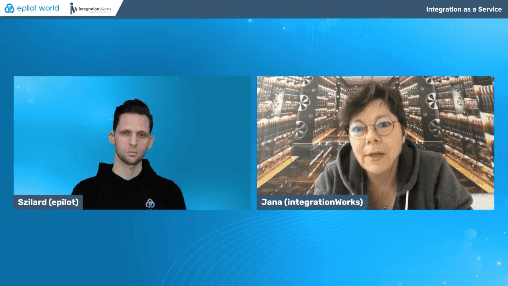
Interviewed at ePilot World 2022 for integrationWorks GmbH, Germany on the topic of Integration as a Service.

Integration is the enabler for your transformation. Like ePilot as a front-end system for energy providers. ePilot provides a customer-friendly and modern system for its end users. Connect it with your in-house backend systems or other cloud-based SaaS applications such as your CRM.

At the same time, the modernization of the application landscape can be planned and implemented step by step without negative side effects for customers and partners. But also by connecting your DataLake architecture and enriching it with further environment-specific information for the analysis of potential customer requirements for the provision of new services can be realized easily and quickly e.g. with the help of integration platforms like Boomi. By directly connecting marketing, sales, and operations, services around your customers can be further optimized.

Curious now: Just have a look at the video or contact me, or integrationWorks GmbH directly.

Tamacoinchi & Co – Students Pitch Their Blockchain Projects

Tamacoinchi & Co – Students Pitch Their Blockchain Projects

It’s time for a new kind of energy! A debut took place this summer semester with the course “Blockchain with Ethereum & Solidity” led by Jana Bulkin. Twenty-five students from the Faculty of Computer Science and Mathematics at Munich University of Applied Sciences first became familiar with the theoretical basics of the topic. Later they were able to develop their own projects in small groups based on real-life conditions with the help of state-of-the-art tools.

Blockchain? What is that about?

Briefly explained for non-IT people: Basically, a blockchain is an infinite chain of interlinking puzzle pieces (blocks). This chain of puzzle pieces is not stored centrally in one place to which everyone has access, but in the cloud. Anyone who has created or purchased a puzzle piece filled with data automatically receives a full copy of this chain for local storage on their computer. It is in this decentralized storage that the blockchain’s data security is founded, as any attempted forgery will automatically raise an alarm.

A more detailed explanation can be read here: Blockchain – An answer to your question of innovative digital transformation. This technology can be usefully applied to all sorts of business areas, which was impressively demonstrated by all of the eight student groups in the course.

The Projects

  • NoFansToken: Comparable to the SmartCollectables project, this was inspired by meme authorship and creates a more transparent ownership. By Alexander Adlmueller, Valentin Altemayer & Yue Kun.
  • Flying Coins: Solving problems of flight insurances (complicated claim process, validity checks, time-sensitivity) with automated smart contracts. By Nimra Ayub, Ha ton Thanh Huyen & Sofia Steinleitner.
  • Bazinga: Find out more below. By Simon Hirner, Fabian Rittmeier & Vitaliia Savchyn.
  • HelpingHand: Using smart contracts, Christian Bernhard, Arian Geilen, Thomas Ziereis & Alexander Richter simplify & secure the process of donating money to friends / people in need.
  • SmartCollectables: Benedikt Holzner, Ludwig Horn & Jakob Ruchnewitz make digital artwork ownership & authorship more transparent, traceable and thus less prone to fraud.
  • Safer Supply Chain: Similar to the Block Tracker project, it deals with the intransparency of supply chains by using blockchain-supported smart contracts. By Athanassios Fugi, Dominik Pfluger & Caesar Sangsumran.
  • Tamacoinchi: Find out below. By Florian Huber, Alexander Parr & Enis Tola.
  • Block Tracker: Solving the issues of traditional supply chains (data management, inefficiency, unreliable information) through automated smart contracts. By Angelov Trajche, Johannes Krum & Lim Kok Hee.

This Blockchain & Solidity course really is a great introduction to the world of blockchain technology.

Especially the practical part – from the initial planning phase of our app ‘Tamacoinchi’ to the final implementation and presentation – was a lot of fun for me.

Enis Tola, Blockchain course participant & student of Business Informatics at Munich University of Applied Sciences


What does the Blockchain Ethereum & Solidity course entail?

After a general introduction, the students went on to learn about the various application scenarios – which, in fact, go far beyond the field of cryptocurrency. The students set themselves a wide variety of goals: For example, they are interested in making supply chains more transparent, securing copyright and ownership of digital assets, making it easier to donate to fundraisers, or regulating insurance and compliance via smart contracts.

Before jumping into the thick of things, a Solidity tutorial was on the agenda, which gave the students a step-by-step introduction to the tools. For example, they learned about infrastructure components that are necessary for the development of dApps (decentralized apps) before moving on to the hands-on part based on MorpheusLabs SEED. This involved completing four exercises, with the help of which the practical interaction of all components was gradually acquired. Then it was time for the project assignments.

The use cases, best practices, solidity, and real-life conditions for evaluation and implementation in the enterprise that the participants had previously learned were now applied in the application part: With the help of the Blockchain PaaS SEED from MorpheusLabs, the students developed their Blockchain projects based on their own ideas. First, they identified problems with existing business processes, which they then addressed with the help of blockchain solutions. The added value resulting from this, as well as a business process modeling, was pointed out.

Blockchain Implementation Process / Blockchain Implementierungs-Prozess

The team of Florian Huber, Alexander Parr and Enis Tola embarked on a creative journey back in time to the nineties. Based on the popular children’s toy Tamagotchi, their product Tamacoinchi is a derivative that is characterized by teamwork and networking with friends and other players. This allows players to track each other’s progress and also help out when a fellow Tamacoinchi is on the verge of extinction.

The jury is happy with all project pitches

The course culminated in mid-July when students presented their projects online to the plenary session. All of the results were elaborate, creatively implemented, and showed a great level of knowledge of the subject matter.

For example, the team of Simon Hirner, Fabian Rittmeier, and Vitaliia Savchyn’ project Bazinga dealt with the topic of copyright of digital images, so-called memes. Their circulation and reach can sometimes generate large numbers of clicks, awareness, and thus profit. However, the question of authorship keeps coming up. NFTs (non-fungible tokens) on a blockchain, which are assigned once to the initial version of the meme, could solve this problem. In the case of further circulation, authorship can always be proven or the rights to it can be sold on digital marketplaces.

The jury, consisting of Jana Bulkin, CEO of S2BConnected and with extensive experience in blockchain technology, as well as IT specialists Francesco Menniti from Munich-based part of integrationWorks GmbH and Dorel D. Burcea from the Singapore-based MorpheusLabs Pte., evaluated the creative course performances and were delighted with the great results. Even though we can only present two of the projects here as examples, all other results were also incredibly successful. With such outcomes, we are looking forward to promising young professionals who have already been able to gain practical experience!

We are happy for all participants of the course about their gained experience. Are you also interested in learning more about blockchain? Do you already have a detailed idea but do not yet know how to proceed with the implementation? We will be happy to help you and refer you to the best-fit specialists. Let’s go! Let’s go!
RPA Seminar 2021 Was a Success – Creative Student Projects Show Great Potential

RPA Seminar 2021 Was a Success – Creative Student Projects Show Great Potential

What does the RPA seminar make possible? Just imagine: What a great day! You get the new job in the city of your dreams and begin looking for an apartment. Of course, you have certain requirements – good location, spacious, not too expensive. You now enter these requirements into a filter and as a result you are presented with a comprehensive list of available properties, including the relevant key data.

This is how simple the search for an apartment could be in the future; no more sifting through countless different websites. What does it take? Innovative ideas and the know-how of tech-savvy people, such as the seminar participants Barbara Demendi, Markus Kudela and Aron Szabo, who have automated the relevant processes for that search.

So, what is this RPA seminar about?

Robots already facilitate numerous routine processes such as the above. Therefore, this semester 24 students of the Faculty of Computer Science and Mathematics took the elective seminar of “Robotic Process Automation. They got this opportunity for the third time this year to find out which unsolved problems there are in this area in order to create automated process flows.

At the beginning there is a theoretical introduction to the subject. Relatively quickly, however, it gets down to the nitty-gritty: the students get to know the UiPath tool and form several small groups to develop solutions for realistic use cases. In the last online session of the semester, they then present their efforts in a pitch.

This pitch included explaining how they went about programming the robot and why the software-based implementation they chose made sense. But the purely technological part is not the only thing; the projects should also be able to hold their own in the real business environment as much as possible. That’s why the development of suitable business models including profitability calculations was another topic of the presentations.

The seminar project pitches

  1. Amazon Invoice Automation: Simplifies the proof of taxable purchases via Amazon through automated invoice issuance. By Nina Grabow, Philipp Keidler & Markus Vierheilig.
  2. Order Automation for Production Industry: Order process is error-prone, time-consuming and cost-intensive, automated solution solves these problems & simplifies documentation. By Oglou Oumout Giasar, Tolga Kayapinar & Teodora Pencheva.
  3. Payroll Automation: Payrolls are created automatically, as especially in small businesses these tasks are still performed manually one by one, which costs time and is prone to errors. By Dominik Moelter & Daniel Richter.
  4. Filter Bot: Automated invoice generation for wholesale, which lists different invoices & items clearly and automatically. By Enes Aksakal & Ganna Minakova.


  1. Immo Robo: See above scenario. By Barbara Demendi, Markus Kudela & Aron Szabo.
  2. Know-Your-Customer Check: Described in more detail below. By Marc Hennig, Lisa Kothgasser & Pia Lippert.
  3. Point-of-Sale Roboter: Similar to Team 2, Athanassios Fuqi, Manuel Genster & Susanne Moelter dedicated themselves to the automated ordering process, but in the retail of goods instead of the manufacturing industry.
  4. Dormatically: Automated verification of rental payment of student housing furnishings to make the process faster and less error-prone. By Mateo Rodic, Promwat Angsuratanawech & Enis Tola.
  5. Email Customer Support: See described below. By Doan Pham Yen Oanh, Paulina Fessl, Kerem Oeztuerk.

The practical introduction to UIPath allowed me to gain a solid overview of the topic of Robotic Process Automation. The team work was a great hands-on addition.

Marc Hennig, seminar participant & student of business informatics


What did the students accomplish?

The pitch of the student projects at the end of the seminar was exciting. For example, the team of Marc Hennig, Lisa Kothgasser and Pia Lippert chose the use case of companies that have to undergo an audit. These are required by law to provide, analyze and evaluate data about their business contacts in order to prevent fraud. Their “Know-Your-Customer” robot is designed to simplify this by automatically documenting and evaluating identity verification, and all other relevant data.

Jana Bulkin as lecturer as well as the IT specialist Francesco Menniti from the Munich branch of integrationWorks GmbH then evaluated the student concepts. The lecturer emphasized how high the general standard of all seminar projects was. The students were pleased with the theoretical knowledge, for which they were then able to find practical uses right away.

For example, Dominik Möltner and Daniel Richter developed an automated solution for payroll accounting, as this is a perfect example of recurring, rule-based and structured processes. All other use cases are also impressive. For example, there is the robot that helps with the automated inventory after a sales transaction in a department store or the chat bot that independently filters whether and how it can help users in customer support and, if in doubt, forwards the inquiry.

These are just four of the nine projects, whose quality is in no way inferior to those mentioned, but which would exceed the scope of this article. The fantastic results demonstrate once again that this is what hands-on teaching and learning should look like.

All these projects are great ideas that have the potential to make everyday work significantly easier. A success for all involved. If you would like to learn more about these topics at a seminar or workshop or already have concrete ideas about the processes to be automated, please do not hesitate to contact us – we will be happy to help you with the implementation and connect you with the appropriate experts.