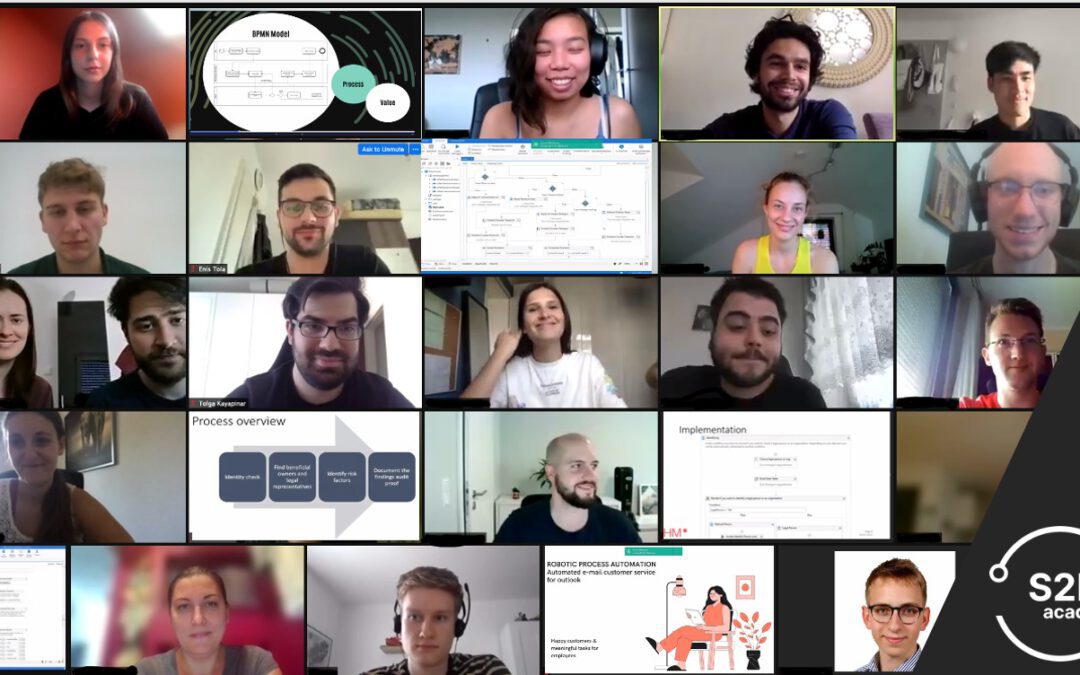

We Reveal Why a Hackathon Is Worth a Try

We Reveal Why a Hackathon Is Worth a Try

Haven’t you heard of hackathons? The word is a combination of ‘hacking’ and ‘marathon’. However, it’s not about hacking data – it’s an event that classically runs for 48 hours. Software developers from various disciplines, as well as graphic designers, project managers and other technology experts, come together to solve a specific problem. The goal is to create a “running” software or hardware at the end of the event in which everyone involved was able to give their input.

Who would profit from a hackathon?

Schools

As a school you can actively address the topic of digitalization and integrate students into the ideation process or even assign them responsibility. Students may actually come to an initial decision here regarding their future career aspirations. It is important to adjust the scope and technical depth and to note that it might “only” be ideation processes with the support of design thinking, for example. This does not have to be a weekend project, but can also be offered in the form of a project group and held throughout the school year or during summer break as a purely optional event in a camp with an extended social program.

Universities & Colleges

Students get insights into the reality of work, practical experience, they can show skills under supervision and prove them to potential future employers. Universities and colleges that combine practice with theory create added value; as part of their elective courses, this can enhance the curriculum and introduce students to best practice combined with hands-on experience in projects for relevant key technologies. This is also possible as a weekend event or as an optional summer school offer for 1-2 weeks during the semester break.

Companies & Organizations

Issues are dealt with in an innovative way with a target orientation and concrete results. The idea here is that companies formulate relevant challenges, including the company-specific technical framework, and put them out to bid for a hackathon. This can be done purely in-house to encourage employees to actively help shape the future and change the organization, to deal with new technologies and thus see whether this could be a topic for professional development (internal job market).

However, it also makes sense to issue an external tender to universities, chambers of industry and commerce, or to the public at large, in order to gather ideas for issues and even for recruiting. Especially within a dual education this opens the possibility to extend it by a hackathon as a company-specific practical part to positively influence and incentivize motivation and knowledge building. Who knows – you might find a team or StartUp that fits the company, from which a kind of dynamic innovation hub can emerge.

6 advantages of hackathons

  1. Dedicated approach to a challenging problem → no distractions caused by daily business routine
  2. Experts from a wide variety of backgrounds work together → everyone knows exactly what is being worked on, no delay in communication channels
  3. Cooperation of employees who otherwise do not cooperate much → strengthening of the team spirit
  4. Understanding of the necessary roles in a team to develop a product and/or solution → better comprehension of the big picture
  5. Employees come into contact with previously unknown topics → broadening of personal knowledge
  6. Cooperation with e.g. universities can be used for recruiting and screening → early engagement of potential future job candidates

What is the relation between S2BConnected and hackathons?

concept hackathon

Hackathons are absolutely in line with our ‘Connected’ motto: we help you network for innovative solution finding. Because as we can see, all parties involved in the hackathon benefit from this event. For the planning and organization, however, you need some knowledge about the processes of such an endeavor.

In addition, it is advantageous to have good contacts to a wide variety of experts in order to be as diversified and specialized as possible. Through many years of practice in the software industry, we are able to build these networks and put them at the service of your progress.
© stories / Freepik

What is the procedure for a hackathon?

Pre- and post-event work must be done: among other things, the definition of the scope, the offer and the adaptation of the technological platform in advance as well as the post-event evaluation, the implementation of special trainings and the communication for the respective channels. We will be happy to assist you in this process. When it comes down to the nitty-gritty, the general process is as follows:


Holding a hackathon

  1. Define & communicate agenda
  2. Assign roles: keynote speaker, mentor and jury members
  3. Various agenda items:
    • Instructions
    • Bootcamp
    • Gathering in plenum
    • Motivation of the teams
    • Evaliation of the team efforts
    • Matching of a solution proposal
    • Communication to sponsors, customers and teams
  4. Recognize achievements, celebrate and general exchange, networking

Now, let’s say…

… you have a need to make your supply chains more transparent and traceable and are considering blockchain technology to do so. It is now worthwhile to hold a hackathon about this. We can initiate this for you, for example in cooperation with our partner MorpheusLabs Pte. There will then be something for everyone: those who don’t already have the skills can participate in workshops, there can be competitions in teams on specific use cases. This is how the ideation process starts and things get moving to create a first Minimum Viable Product (MVP).

Getting curious? Feel free to contact us for a non-committal consultation. We look forward to being innovative with you.

Agile product management – Follow the road of smart innovations

Agile product management – Follow the road of smart innovations

A solid product that meets their expectations and makes their lives easier is what your customers want. To ensure this, you should take an in-depth look at the different aspects of product management. The approach of agile product management follows a plan with different steps that aligns with your vision, yet is flexible to new customer requirements. With a clean methodology you will master this task. Because every innovation needs a framework. In this article, we will first introduce the steps to be taken and then present three practical examples that illustrate various key points of decision-making for an approach.

Creating a successful product step by step

Where customer, technology and business meet, it’s all about agile product management, as we describe it here. To maintain a balance within this triangle, you should define a framework that supports you in this endeavor:

  1. SELF-ANALYSIS: Take an in-depth look at your specific market segment, get to know your competitors and define your niche.
  2. CUSTOMER ANALYSIS: Get to know your customers. What challenges and problems do they face and what solutions would they like to see?
  3. PROBLEM ANALYSIS: This involves taking a closer look at the challenges faced by your customers and validating them. Various criteria can be evaluated for this purpose:
    • Root cause research: Ask questions, for example follow the 5 Why questions, to get to the source of a problem so that you can do more than just treat the symptoms.
    • Frequency: Find out the frequency with which your customers experience the problem in question.
    • Extent: Determine the proportion of your target market that regularly experiences the problem and is limited by it.
    • Measurability: Provide a sample calculation to quantify costs & benefits for your customers.
    • Actuality: Check your specific market segment for new developments and predicted trends.
  4. SOLUTION FINDING: To do this, develop your implementation plan and proceed using measurable criteria.
    • Ranking: Prioritize which problem needs to be solved most urgently and whose solution consequently has the greatest benefit. You make the decision by evaluating the customer benefits, the implementation effort, the profit opportunities as well as the required work effort/skills, etc.
    • Scheduling: Define milestones, a target date and create a detailed plan including estimated duration of the different steps for the implementation – this helps at the same time to further qualify the ideas and possibly adjust the scope.
    • Communication: Create a story for your customers and visualize it. To do this, define the end user, highlight his or her problem, describe the benefits of using your product, and know the requirements for high market acceptance.
  5. REALIZATION: Stick to your schedule and get active.
    • Most Viable Product: Create the MVP and validate its key features. Also collect user feedback to measure prediction accuracy and impact. Duration is about 1 – 2 months according to the Think Big – Start Small approach.
    • Marketing: Plan and set-up the different tools for customer interaction (sales, support, customer targeting). Duration is about 2 – 4 months.
    • (Re-)Launch: Write announcements, identify key customers, identify support bottlenecks. How are customers using your product?
    • Statistics: Even with the first stage of the launch, it is important to collect data. What feedback do you get from your customers? Compile criteria for Key Performance Indicators (KPIs) to adjust functional requirements, make improvements and react flexibly to potential changes in the market.
  6. REVISION: Review progress regularly against measurable data to make improvements.
    • Checkpoints: Track KPIs to review previously established measurable indicators based on data. Record and visualize results.
    • Deficiencies: Plan improvements based on forecast accuracy, data on user engagement and feedback, and the number of critical defects.

Agile product management in practice

The design of agile product management in large companies is always a challenge, especially if the planning and cost aspects are mainly based on a standard approach. For example, when mean value, portfolio and project evaluations are evaluated about once a year and assigned to the respective clusters.

agile product management budget planning

The budget allocated to innovation is usually based on the costs required for maintenance and ongoing operations. In order to keep the gap between the budget available for innovation on the one hand and that for ongoing operations on the other small, consolidation and housekeeping measures are a prerequisite. For example, it is important to take into account business requirements such as the necessary adjustments, which the IT department must implement according to both a top-down and bottom-up approach. Corresponding scope must be planned at an early stage in order to initiate essential changes directly.

This avoids having to postpone projects or down-prioritize what has already been planned. Agile product management should be supplemented by clean portfolio and project planning.
© osaba / Freepik

Food for thought: If you are pursuing plans that have a major impact on your end product, you need a clear vision and mission in order to be able to start stakeholder alignment as early as possible.

For a product that only serves a specific area or function, agile product management is somewhat easier than for products that define the organization on a global level, where product ownership is not on the business but on the IT side. This makes sense, as these services are referred to as platforms and infrastructure and are intended to create synergies of a cross-divisional nature, which does not necessarily make planning easier with a divisional top-down planning process.

On the other hand, if the impact is so significant that more or less your entire team needs to be involved, changes that impact actual end-users will be difficult to reconcile with your platform alignment. The effort involves the challenging balancing of your stakeholders who are already using your platform, their new requirements and on top of that, potential new customers who want to be served at the same time.

1. Example: Agile product management for enterprise-wide services

Depending on the service design, agile product management can be influenced by various factors that need to be considered for planning. As a rule, services combine a large number of products and technologies, all of which are subject to their own lifecycle. If, in addition, there is a general change of architecture for one of the core components, the question of cost and benefit arises, as this may also entail massive migration efforts.

Here it makes sense for you to consider whether a general platform change could possibly be more cost-effective and also more innovative. In this case, you need to arrange an early information of the provider about these major implications and a good cooperation in order to allocate the necessary budget and to proactively address its impact on the overall project and portfolio planning as well. Take this time to generate stakeholder awareness. Once the budget is allocated to the service owner, the project for this change can begin.

Big bang approaches may not be effective here; an agile approach to rolling out the new architecture in this case should take the approach of moving forward process by process if the service is connected to multiple E2E processes that impact B2C satisfaction. The platform itself and the preparation of the backend then follow a rather classic rollout approach. This results in an “agile waterfall approach” – hybrid approaches are often the better concepts for lifecycle management of critical enterprise services.

The key is not to prioritize what’s on your schedule, but to schedule your priorities.

Stephen R. Covey, author and management expert


2. Example: Agile product management E2E for an external IT provider with overarching cloud philosophy

Agile product management from the developer’s point of view should meet some requirements:

  • Pursue a “DevOps” philosophy, or ensure that at least some self-managed services are in place from the product owner’s perspective.
  • Sufficient free resources should be available in the infrastructure and it should be scaled horizontally so that innovations are not slowed down by shortages from the start.
  • An effect-based allocation at the application level makes system owners responsible for costs in order to act conscientiously with the resources made available.
  • Medium resource pools should be available with established housekeeping services.

Once these basic pillars are established, the basis for agile development is created. Another point is the awareness of responsibility and acceptance that errors are possible and that an internal service culture with service responsibility should be established. Reviews by internal auditors and security should add value rather than create fear when a problem is found. A service catalog within the organization can help.

It is worthwhile to have a central architecture team to take care of the strategy, assisting with product portfolio management through appropriate processes. Avoid a hero attitude of (full-stack) developers because in complex organizations nobody can know everything and besides that, it is harmful for the team spirit – at least to our thinking.

Make sure that communication and collaboration platforms are in place to support the agile product management. This gives customers the opportunity to make requests and product management is able to communicate the new features. The entire organization should operate as a team with clearly defined responsibilities. It might also be worth thinking about the Lean approach here, as learning is also important in this approach. Regarding this, we have another interesting article: This is how you succeed in the CUCA World.

3. Example: Product management in an IT consulting company for tech-savvy startups (first step into product ownership)

Guiding IT consultants into a product owner mindset is a challenging task. Often they know the philosophy of agile product development, but they don’t fully understand project management (what needs to be done by when). This is because the majority of IT consultants are used to receiving instructions from the outside. They are hired to perform the implementation according to standards that may have already been set by the client. During the testing and release of the product, they are usually no longer involved and will ultimately not come into contact with the customers.

This problem has nothing to do with their personal attitude, but is rather in the nature of the business. Consultants look for the solution that seems best for them, possibly without thinking about maintenance and cost effects as well as skill and knowledge transfer. Therefore, the essential attitude of taking full responsibility from the product owner’s point of view might not yet be fully present. It is completely logical that this will not happen overnight. Therefore, it is quite possible that management will have to make a decision. However, such issues are usually not part of the agile product development approach, even though this is a parameter to manage a product from a 360-degree perspective.

It might be sensible to follow the lean approach here, where failure is allowed and understood as a learning opportunity rather than a defeat. The entire organization, including management and leadership style, should be adapted to this and seek support if the change from a pure IT consulting company to a company with product ownership is to be made.

Your product is your flagship. How it works and what appeal it has will largely determine the success of your business. These criteria can be influenced in advance by a thoroughly planned approach and the diversity of your team. Become aware of what you want to achieve, which adjusting screws are necessary for it and which approach is best suited for it. Products are created by people and are supported by technology – PPT, these are the three most important parameters for successful product development.

Blockchain in Use: A 10-Step Implementation Plan

Blockchain in Use: A 10-Step Implementation Plan

You already know what blockchain is and what it offers? Wonderful! Let us now show you the steps that will lead you to a successful implementation. To brush up on the basics beforehand, you can read our article Blockchain: An answer to your question of innovative digital transformation. Here, we will now focus on which use cases exist, how you can identify them, and how to proceed.

The question of questions: Who are you?

Before you get down to the actual planning, it’s helpful to be aware of where you’re positioned in the market and the resulting options for moving forward. Who are you, what do you want to achieve and what are you capable of providing? After all, there is no such thing as a single strategy suitable for all companies, and all approaches have both advantages and disadvantages. For a more in-depth look at these, we recommend reading Mopheus Lab’s article Strategic Approaches to Adopting Blockchain. It should be noted that blockchain is still in its early days and these insights gained from experience should be seen as tendencies rather than fixed rules.

Food for thought: Think Big, Start Small – it will pay off to think about your Big Picture. Embed this in a story and launch a Minimum Viable Product on the market without much delay. Then it can be verified for feasibility and the further development can be openly communicated with the help of a product roadmap.

10 steps towards a successful implementation

In creating our 10-step plan, we roughly followed Tiana Laurence’s Blockchain for Dummies. In addition to the deployment options and the choice of use cases, it also shares interesting info about the different platforms, the benefiting industries and already existing blockchains. Now, let’s get to the meat: The implementation procedure can be roughly divided into two major sections: first, the selection of a suitable use case and second, the groundwork for the actual implementation of the selected case.


Identify Use Cases

  1. Will your business benefit from Blockchain?

Orientation is the key : create awareness and a general understanding of the added value and possibilities of Blockchain. If you are not sure, conduct a workshop first.

  1. Which are the disruptors and problematic spots in your processes?

Self-analysis is the key: Review your company’s processes for inefficiencies and, more importantly, process steps that cause delays, frustration, errors, and/or redundant work. Consider where you want to go. What challenges do you face with respect to your current transaction networks?

  1. Which uses for blockchain are fitting?

Alignment is the key: Identify how Blockchain can contribute to your process optimization. To do this, look at the different features of Blockchain, such as those that address inefficiencies, redundancies, and high costs.

  1. What is the best use case to get started?

Simplicity is the key: To get started, it should be a less complex use case (e.g., a specific service within your previously identified bottlenecks) that adds value to your business. Using the S.M.A.R.T. principle, already define precise goals that you want to achieve.The use case must be evaluated and defined based on the criteria of consensus, provenance, immutability, distributed ledger technology.

Blockchain technology has such a wide range of transformational use cases, from recreating the plumbing of Wall Street to creating financial sovereignty in the farthest regions of the world. Perianne Boring, Founder and President of Digital Chamber

Create an implementation plan

With the selected use case in mind, get to work on doing all the necessary groundwork and follow-up care for your implementation.

  1. How do you define the goal for your Blockchain network?

Storytelling is the key: The goal for your initiative must be clearly defined and measurable. What is the problem you intend to solve and what improvements will you make to your business, what process will you optimize, what problem will you fix? Take the time to formulate your story in a winning way so that every stakeholder understands your innovations and can support them. Create a positive team atmosphere. This step runs parallel to everything that follows.

  1. Where can possible dependencies come up?

Planning is the key: Think in advance about future obstacles and eliminate them. Identify all resources and you can already address some post-implementation activities. Set up your project cleanly, start with a kick-off that includes appropriate onboarding of the team. Tools: BPMN, Solution Architecture, Capability Landscape, Project Management, Trainings & Workshops.

  1. How do you rate your Blockchain platforms and providers?

Best Fit is the key: Identify collaboration partners and the platform that best fit your functional requirements and satisfy your NFRs from a technical perspective. Define an appropriate evaluation process where you consider both functional requirements (FRs) and non-functional requirements (NFRs). This can be done using a clearly defined Proof of Concept if more than one DLT is available. Otherwise, define a 1st release with a smaller scope. Apply the results of your use case analysis and bring the results into your evaluation matrix. Tools: FR/NFR Criteria, BPMN, Solution Architecture.

  1. Implement your project

Action is the key: Design, implement, and set up your blockchain application and networks. Keep your approach about market positioning in mind, define clear roles and rules in terms of infrastructure, development environment, programming language, which digital ledger technology? Task management system, implementation guidelines and how-to tutorials can help with the onboarding of further team members.

  1. Test your application end-to-end

Result analysis is the key: Test and optimize your application and network. Define your test cases correctly from a technical and business point of view. Refer back and check the previously defined criteria for success control according to the S.M.A.R.T. principle. Tools: Q&A surveys etc.

  1. Celebrate success and look out for new use cases

Communication is the key:Successful deployment and service setup in the production environment is behind you. A follow-up planning session is scheduled. Celebrate your success and communicate it! Schedule a “lessons learned” session and make sure you capture the results. Thoroughly plan the follow-up session for next steps. Tools: lessons learned, success stories, channel communication, celebrating.

Wherever you currently stand – the thought of Blockchain is not wasted and can help to open up new opportunities. We wish you the very best for your future endeavors and look forward to hearing your ideas, questions, suggestions, or feedback.

Blockchain – An answer to your question of innovative digital transformation

Blockchain – An answer to your question of innovative digital transformation

The news volume on the topic of blockchain is on the rise. This is mainly due to the growth in value of various cryptocurrencies – most notably Bitcoin – which are a subcategory of the Blockchain ecosystem. However, the assumption that “Blockchain equals Bitcoin” is far too simplistic. Blockchain technology is also highly viable for numerous other business processes outside of the financial sector. This article can give you a first impression whether the topic is also interesting for your business.

Blockchain as a puzzle: a visualization

You’ve heard of blockchain, but so far it’s nothing more than a buzzword from the IT finance industry to you? No problem. Let’s break the concept down to a scheme commonly used in everyday life.

Think of a blockchain as an infinite chain of jigsaw puzzle pieces (blocks). Now, this puzzle piece chain is not centrally located in one place that everyone has access to, but in the cloud. Anyone who has generated or acquired a puzzle piece, automatically receives a complete copy of this chain for local storage on their computer.

abstract image_people carrying puzzle peices_menschen die Puzzleteile tragen

The connection between form and content of the puzzle pieces is essential. Comparable to the image shown on a jigsaw piece, there is also information stored in each individual block, e.g. details of a transaction. Each block is assigned an individual ‘hash’, which is basically a code of numbers and letters, a digital fingerprint. This hash also includes the hash of the previous block, from which the chain is created.

In our chain of puzzle pieces, the hash corresponds to the respective shape of the pieces, including indentations, protrusions, length, width, etc. of the edges. These pieces are cut in such a way that they fit into each other, i.e. they always contain the shape of the previous puzzle piece at the same time.
© rawpixel / freepik.com

Ultimately, this is the reason for the security of the blockchain. As soon as someone tries to manipulate the content of a block, the hash of the block automatically changes and the chain is interrupted. You can imagine this as if you were to paint a different image on the puzzle piece, which then automatically changes shape so that it no longer fits into the next piece. This piece retains the old shape and the chain is broken. That way, anomalies are quickly detected and can be fixed.

For as soon as a user wants to add a new puzzle piece to the chain, each individual puzzler must first check on their computer to see if the chain is still intact. Likewise, there is a peer-to-peer check on Blockchain and only when this has been checked off as approved by each individual is the new block allowed to be added.

What are the advantages of blockchain?

  • Transparency: Even if anonymized, transactions are publicly viewable and this adds an unprecedented dimension of traceability. Every business unit is held accountable to act with integrity, whether that’s to the growth of the company, its community, or its customers.
  • Safe & protected network: As an archiving system, Blockchain is far more secure than comparable technologies, as each piece of information is encrypted and linked to the previous one. Blockchain, as explained above, is formed using a complex chain of mathematical numbers through a decentralized network of computers. It is immutable once it exists. This immutable and incorruptible nature of blockchain makes it safe from forged information and hacks.
  • Assured traceability: Every time, for example, an exchange of goods is recorded on a blockchain, an audit trail is in place to trace where the goods came from. This helps to verify authenticity, trace a supply chain from manufacturer to distributor, or to provide irrefutable proof of ownership.
  • Customized solutions: Due to the fact that Blockchain is still relatively new on the market of digitalization possibilities, there is a wide range of constantly emerging solutions for various business areas. This offers great scope for innovation and growth.
  • Cost-saving: Blockchain-based track and trace technology allows you to reduce costs on your end and increase profit margins by cleaning up supply chains, eliminating intermediaries, and essentially ridding the manufacturing process of counterfeit elements and detours.
Food for thought: Are you thinking about using blockchain? Start by creating awareness and a general understanding of the potential and opportunities of blockchain. Attend a workshop in advance if you are unsure whether Blockchain can be usefully applied in your industry or company.

What challenges are awaiting you?

Clearly, blockchain is still a baby within the IT world. While it is growing quickly and gaining traction, even experts can only make promises based on experience rather than rules. Blockchain’s adoption rate and effectiveness are based on real-world application findings. No one knows the full extent of the beneficial or detrimental effects for each new implementation that is made. Results can vary and as yet, blockchain technology simply does not have a large enough sample size or data for analysis that allow predictions with 100 percent certainty. But there are fields where there are solid opportunities to use blockchain to drive digital transformation.

Where blockchain technology comes in handy

Blockchain makes sense wherever you want to archive something immutably, be it on the topic of real estate, personal identities, proof of quality or traceability upon a change of ownership. This ranges from so-called ‘smart contracts’ to the storage of confidential data, secure elections and the seamless documentation of supply chains.

The latter point in particular opens up great opportunities when proof of origin is necessary, as in the art market for instance. Anonymity and non-traceability are often desired to ensure the privacy of buyers and sellers. Blockchain provides an inherent solution to this need, as the identity of the digital wallet owner remains confidential. The same holds true for tracking quality criteria for the preservation of a transported good (temperature, humidity, etc.) – a useful technology in combination with, for example, IoT technology, especially in the food sector.

The value of blockchain in both the industry and the service sector has long since grown beyond the topic of cryptocurrency. Highly successful examples show that blockchain as a decentralized ledger of supply chains, money or confidential data, provides highly efficient solutions for businesses and society.

Jana Bulkin, CEO of S2BConnected


So-called smart contracts open up a wide range of possibilities in the context of contracting, such as a rental agreement, a real estate purchase or even a vacation booking. All those areas where two parties enter into a contract provide the opportunity to use smart contracts, which are considerably more fraud-proof.

Last but not least, the already mentioned financial sector with cryptocurrency should also be mentioned, which enables unbound transactions outside of national currency units and intermediaries, thus saving unnecessary steps and guaranteeing secure processing.

Blockchain: The answer for every company?

Even if all this sounds plausible for now, you should not rush the decision for blockchain technology. Depending on the industry, it is sometimes more and sometimes less suitable; for example, it is difficult to find added value in construction or mining industries. After all, while the benefits are certainly evident in some subsectors, the ratio between the total cost of implementation and the benefits is not profitable.

Find the right strategy for your business

Before deciding on a blockchain adoption strategy, get clear on your own company’s vision: Who are we and what do we want? The strategy can then be built on this. There are 4 main types:

  1. Leaders. Companies that are willing to use their leading position to set new standards for their industry in the market.
  2. Disruptors. Companies that often present themselves in a market where they do not have to worry about stableness, as they do not dominate the market and are practically unknown to the general public.
  3. Opportunists. Companies that typically wait, weigh their options, and implement the most appropriate technology when it is needed. They are often unable to adopt the leader approach for a variety of reasons.
  4. Innovators. Companies that could easily adopt the Leader approach, but are motivated simply by seeking innovation or improving their current business model or services.

You can also get a more in depth look at this in the article Strategic Approaches to Adopting Blockchain by our partner Morpheus Labs. The next step is then for you to create your approach to finding suitable use cases and to establich an implementation plan. We are covering this topic in our next article: Blockchain in Use: A 10-Step Implementation Plan
.

Where the century of digital connectivity brought new opportunities for organizing flows of data, Blockchain does so for flows of value. Blockchain is thus a must-have for any process improver. If you have any further questions or suggestions on the topic, please don’t hesitate to get in touch.

Support Your Digital Transformation with Robotic Process Automation

Support Your Digital Transformation with Robotic Process Automation

Technology at the service of people and solving problems through technical innovations – this is the vision of a digital future. However, we are certainly not the first to call for all sectors to rapidly drive forward the digitalization process. This is a central challenge of our time. In the following, we will introduce a technology that plays a fundamental role in this process: Robotic Process Automation, or RPA for short.

What is Robotic Process Automation able to achieve?

If you have never heard of RPA, now is the time to learn about the principle and how it works. It is a business process automation technology that allows software or a “robot” to be configured so that it mimics and incorporates human actions. This is done by interaction between the robot and digital systems in order to execute various business processes in an automated manner.

Comparison: Robotic Process Automation versus APIs

In traditional workflow automation, a software developer uses application programming interfaces to create lists of different actions to connect tasks and the interface to the back end. Robotic Process Automation technology, on the other hand, uses the user interface itself. An RPA robot observes what actions users take to perform a task, captures that data, and then automatically controls application processes just as users would do manually. It interprets, triggers responses, and communicates with other systems to complete a variety of repetitive tasks.

Where is it useful to implement Robotic Process Automation?

Robotic Process Automation is not a universal solution for all business processes. However, there are some areas where it can provide excellent value. This arises from the following four characteristics of processes:

  1. Repeatable: Processes that run cyclically with possibly high process volumes are particularly suitable. It is important that the same steps are performed each time.
  2. Rule-based: Processes that are based on individual laws that do not change. If X happens, Y must follow.
  3. Standardized: The individual actions within these processes must be based on standards. At most, there can be minor deviations from this standard, so that the automation is straightforward.
  4. Structured & data-based: The processes can only contain known sequences that follow uniform structures, based on known, captured data.

If these things don’t seem like they apply to your business, you might as well have a look at another promising area of digital transformation in our article Blockchain – An answer to your question of innovative digital transformation.

Sometimes it makes sense to take the second step before the first. That means using technologies and tools that create the space for a strategic transformation of the IT landscape, while measurable benefits are already being generated on the customer side. After all, the customer has nothing to gain if you slowly, gradually transform your IT landscape without achieving measurable benefits. Robotic Process Automation is capable of this.

Jana Bulkin, CEO of S2BConnected

What are the benefits of using RPA?

If you use RPA successfully, a whole range of advantages opens up. You don’t have to change your existing IT landscape or change application systems – RPA can be implemented without having to make extensive adjustments or investments. It actually saves expenses. Where human labor was previously required to perform and monitor processes, the tireless robot is now in action. This frees the staff from the obligation to perform these standard activities, thus reducing the general workload. Thus creating room for expert knowledge, further training and higher productivity – efficiency is increased.

Furthermore, this digital workforce increases the quality of the tasks performed because the human as a source of error is eliminated as a risk, there are no inaccuracies or mistakes due to inattention or copy-paste operations. And this high quality is at work day and night, 24/7, which ultimately increases customer satisfaction.

Robotic Process Automation Vorteile_Benefits

What are the benefits of using Robotic Process AutomationPA?

If you use RPA successfully, a whole range of advantages opens up. You don’t have to change your existing IT landscape or change application systems – RPA can be implemented without having to make extensive adjustments or investments. It actually saves expenses. Where human labor was previously required to perform and monitor processes, the tireless robot is now in action. This frees the staff from the obligation to perform these standard activities, thus reducing the general workload. Thus creating room for expert knowledge, further training and higher productivity – efficiency is increased.

Furthermore, this digital workforce increases the quality of the tasks performed because the human as a source of error is eliminated as a risk, there are no inaccuracies or mistakes due to inattention or copy-paste operations. And this high quality is at work day and night, 24/7, which ultimately increases customer satisfaction.

These challenges must be overcome

The fast pace and complexity of current conditions in the business world is also affecting Robotic Process Automation. This will increase the general pressure to change and adapt. New competitors on the financial market are one example of such challenges; so-called FinTechs are attacking established companies. Their often outdated, slow-moving systems have to compete with the very latest technology and state-of-the-art applications of these new competitors.

Innovations must be adapted to regulatory requirements, for example BASEL, Know Your Customer (KYC) or the Data Protection Regulation (GDPR). Furthermore, customer satisfaction is the top priority. Customers always demand a high level of service quality and speed. A balance must be struck between new, emerging organizational structures and agile process structures.

Example: Application of Robotic Process Automation in the financial sector

  • Data synchronization: transferring data from one system to another, converting unstructured data into structured form
  • New customer entry across systems: moving data and performing multiple entries
  • Credit approval: compiling information from different systems
  • Retail credit checks: calculate credit risks
  • Account reconciliation: perform regular checks and automated closings
  • eForm extraction: transfer data from forms and make system entries
  • Price checks: Perform calculations and entries
  • Validation to support audits
  • Credit and order processing: from web form to inventory system (legacy applications)
  • Updating customer data: Reading and updating entries
  • Generate reports across systems
  • Fraud detection by tracking account activity

How should you approach Robotic Process Automation?

The first step is to do the groundwork. This means, in the specific case of your company, analyzing the business processes in terms of regularities and routines with a high amount of manual interactions. This is followed by defining the associated actions and documenting them precisely. All these processes must then be monitored and optimized in an organized manner to guarantee quality management from the very beginning. Only then will it be worthwhile to start with the selection of a service provider and the actual implementation of Robotic Process Automation.


Product selection in 4 steps

  1. Request for Information (RFI): duration approx. 2 weeks
    • Compilation of evaluation criteria
    • Definition of strategic goal and project scope
    • Creation of a long list of different providers e.g. with Gartner or Forrester
    • Obtaining further information from providers through questionnaire
Professional advice: Typical contents of the RFI questionnaire for robotic process automation specify requirements in terms of customer needs, performance, design, architecture, structure, system behavior, features and functionality, criteria for system evaluation.
  1. Request for Proposal (RFP): duration approx. 4 weeks
    • Evaluation of the RFI feedback
    • Creating a short list based on the responses to the questionnaire
    • Requesting proposals from vendors to obtain an initial estimate
  2. Proof of Concept (POC): duration approx. 2-4 weeks
    • Defining the scope of the proof of concept and expected outcomes
    • Staff the project team, in-house or off-site
    • Preparing infrastructure if necessary
    • Defining a potential implementation plan and conduct competency analysis
    • Preparing a management presentation
  3. Proof of Value (POV)
    • Evaluate your process landscape
    • Identify your problematic areas
    • Scout and evaluate related processes
    • Determine the ones with the biggest impact (prove the value)
    • Check for any dependencies within the project/product portfolio
    • Define the implementation roadmap
    • Calculate the break even, checking whether investments are profitable
    • Decision for the most suitable offer

After you have selected the most suitable offer, the next step is to show your appreciation for the efforts of the other providers and to give them dedicated feedback. Now you can venture into implementation, in which the so-called Center of Excellence takes on a leading role. It takes care of the actual implementation into the existing IT infrastructure and regulates the standards for the robotic process automation deployment, determines best practices and screens the support and training capacities within your company.

As you can see, Robotic Process Automation is a comparatively easy and quick-to-implement technology that can take you a long way along the path to the digitization of your business processes. Do you no longer want to work without these easily accessible advantages? We look forward to getting to know your project and are happy to stand by your side as professional consultants.